Mga Pahina

Ipinapakita ang mga post na may etiketa na health. Ipakita ang lahat ng mga post

Huwebes, Mayo 9, 2013

Get Rid of Summer Acne

Is your acne getting worst this summer? It seems like it is proliferating all over your body: face, neck, and back. The backne is noticed to be severe and larger; is a lot harder to cure because it has more oil-sebaceous glands, which is larger those of on the face. Thus, this season needs a thorough, keen attention to take care of your skin. Here are some of the surest way to get rid of acne:


Seek expert help for severe acne  - A short course of oral antibiotics may be needed to treat severe acne, so it’s better to see a doctor. “Antibiotics will reduce bacteria and fight inflammation. However, for deep cysts, Isotretinoin, a powerful medication may be needed but strictly under a doctor’s guidance. Oral contraceptives that balance your hormones can also help, but they may have other side effects,” says Dr Navin Taneja. If you are ready to splurge, you can also opt for advanced corrective treatments such as laser and light therapies. “Laser treatments damage the oil glands, causing them to produce less oil, while light therapy targets the bacteria that cause acne inflammation,” adds Dr Taneja.
Work out your way to acne-free skin - Exercise can help control acne by taming the testosterone hormone that cause excess production of sebum. Cortisol or the ‘stress hormone’, produced by the adrenal gland just above the kidney, is also linked with acne. Cortisol secretion increases when a person is under stress, starving or sleep-deprived. Exercise helps tame cortisol levels. “A 30-45 minute long brisk walk or slow jog several times a week may help reduce acne by normalising the hormones that contribute to those ugly bumps and pustules,” says Dr Anju Ghei of VLCC Healthcare.
Walk, jog, cycle - Outdoor exercises pamper your skin with fresh air and a bit of sun. One of the best exercises is swimming, as water keeps your skin hydrated.

Feel good -  Find an activity that you love doing. It can be yoga, Pilates or anything that helps you feel better from within, thus triggering secretion of the feel good hormones. Regular physical exercise helps release endorphins that can boost your confidence and self esteem. 


Home remedies
Cucumber - The cooling effect of cucumber soothes the skin and in turn, prevents acne outbreaks. Cucumber is also a source of natural astringent, and hence is very effective when it comes to tightening skin pores.

Lemon juice - The acidic property of lemon is quite beneficial for acne treatment. Take a slice of lemon, rub it on your face, leave it for a few hours and rinse off with cold water. Lemon cleans the dirt accumulated on the pores, and hardens the sebum.

Tea tree oil - Tea tree oil acts like an antiseptic and helps in removing damaged skin cells by slightly irritating the skin. This oil is like a solvent and cuts through grease and dirt, thus unblocking the pores. Its antibacterial properties prevents further outbreaks. You can even add a few drops to your bucket of water for bathing.

Aloe Vera juice - Aloe Vera cannot cure acne but its natural healing and soothing properties reduces swelling and redness of acne. Just pick a thick leaf from an aloe vera plant, wash and process in a juicer, and dab the juice with a cotton ball on the affected area, twice daily.

Neem extracts - Neem kills the bacteria that often cause acne. Make a paste of neem leaves by adding little water, and apply it on the affected areas. Leave for about 30 minutes and rose off with cold water. To treat back acne, boil a bunch of clean neem leaves in water, and let the water cool, bathe twice daily with this water.

Right Diet to Fight Acne - Fibre plays an important role in getting rid of body toxins. Eat cereals and fibre-rich food and vegetables such as blueberries, grapefruit to detoxify body and clear your skin. Include Vitamin A in your diet as it is a good source of carotenoids that reduces sebum production. Carrots, papaya, spinach,and tomato juice are all rich sources of carotenoids. 
Avoid processed foods as they are high in saturated fats and transfat, and can lead to an increase in sebum production, thereby triggering acne. If you have a persistent acne problem then food items like deep fried chips, French fries, pakodas, aloo tikkis etc are a strict no-no for you. The saturated oil content also increases cholesterol in the body, leading to poor blood circulation, and this can worsen your acne problem.

Source: http://www.hindustantimes.com/Entertainment/Wellness/Get-rid-of-Summer-acne/Article1-1056940.aspx

Biyernes, Mayo 3, 2013

Science Says Chocolate Causes Acne, Cockblocks Our Love Affair With Truffles


Chocolate-lovers beware: a new study from the Netherlands suggests the delicious sweetie may aggravate acne. Past research also suggests that increased insulin can cause inflammation in the skin, leading to breakouts, while low-glycemic diets stop sugar spikes connected to acne, 

Seems like every time we turn around, another scientist in a lab coat is wagging a finger in our face and telling us things we don’t want to hear. Soda gives us cavities. Alcohol gives us hangovers. And now that a new study from the Netherlands suggests that chocolate causes acne, we’re close to giving up and sticking our hungover, toothless, pimple-covered heads in a big fat sack of denial until the medical profession decides that we’re allowed to enjoy our favorite things again.
 
Sadly, denial won’t silence the Dutch scientists who claim that their study shows a definite link between chocolate consumption and the acne that plagues 80% of American teenagers. To investigate chocolate as a potential cause of acne, the researchers took blood from healthy adults before and after they ate 1.7 ounces of chocolate containing 30 ounces of cocoa. Then they exposed the blood samples to Propionibacterium acnes, a bacteria known to cause acne, and to Staphylococcus aureus, which aggravates acne.

 
In the blood samples taken post-chocolate consumption, the blood cells exposed to Propionibacterium acnes produced more interleukin-1b, a sign of immune system inflammation and a signal that chocolate is linked to the inflammatory response associated with acne. The cells exposed to Staphylococcus aureus produced more interleukin 1O, which is believed to lower the body’s defenses against microorganisms and thus could allow bacteria to infect and worsen pimples.

 
This research isn’t conclusive however, which is good news for those of us who like clear skin and chocolate-covered everything. For one, the Dutch scientists used a teeny tiny sample size (only seven people). For another, there are lots of things present in chocolate besides cocoa (like fat and sugar) that could have caused the blood cell reaction. And finally, while we might not have a perfect pimple cure, science has progressed enough to know that any single person’s susceptibility to acne has more to do with their genetics, hormones, and medications than their favorite junk food. Plus, even if chocolate is responsible for acne, it’s also responsible for this.


Huwebes, Mayo 2, 2013

More Adults Battling Acne Breakouts

When you hit in adolescent period, you will at some point have acne. Sadly, this continues when you become an adult. So, what you have to do is prepare and take care of your skin. There many products guaranteeing protection of your skin and simple ways to keep your skin healthy. And if you are to spend, there are some promising acne treatments that are on horizon from sub-antimicrobial treatments -- low-dose antibiotics -- to vitamins and light therapy. 


Research by a joint team at the University of Pittsburgh and the University of California at Los Angeles has found that the "good" bacteria and "bad" bacteria found on people's skin and in their intestines can determine whether they have acne or not.  
But don't expect a miracle cream just yet, said Huiying Li, one of the lead researchers in the study. 
"We've still got years of work to do before anything appears on the market," she said. There are, at any one time, 40 million to 50 million people suffering from acne, and it's not clear why the number of adults are growing, said a report from the American Academy of Dermatology -- perhaps just more adults seeking treatment. 
Adult acne affects 45 percent of women aged 21 to 30, 26 percent of women aged 31 to 40 and 12 percent of women aged 41 to 50, according to a Massachusetts General Hospital study in 2012. 
Moreover, acne vulgaris, driven by hormones, mostly disappeared by age 18, but these days lasts on average to about age 28, said Lisa Pawelski, a dermatologist based in Monroeville.
For some women, that type of acne never goes away, but it does become less severe. For others, it comes as a nasty surprise just when they're preparing to battle aging skin. 
Jean Camp was lucky enough to have a clear complexion as a teenager but now, at 32, is suffering from a different type of acne known as papulopustular rosacea -- pink bumps, or papules, and pustules, more commonly known in acne lingo as whiteheads. 
She even remembers the date she realized she had it: March 1, 2010.
"I have people asking me what's wrong with my face," said Ms. Camp. "I can never wear makeup, because it doesn't cover up the pimples and only irritates me more. I don't think it's fair." 
These two different kinds of acne can be determined by location: teenage acne vulgaris can be all over the face and back, while the adult version is mostly along the jawline. And the rosacea form can be found mostly across the center of the face, on the cheeks and around the nose. 
"Wrinkles and acne are the diabolical duo," said Suzan Obagi, assistant professor of dermatology at the University of Pittsburgh School of Medicine and director of the UPMC Cosmetic Surgery and Skin Health Center. Certain treatments present a special challenge with older skin, she said, which is thinner and drier and can respond poorly to the high concentrations of benzoyl peroxide teenagers slather all over their faces. 
Sitting in her sunlit offices in Shadyside, she sees no shortage of older women patients "who are not going to outgrow this kind of acne," and, perhaps fittingly, she is turning to light as one of her options.
Source: http://www.post-gazette.com/stories/news/health/more-and-more-women-are-battling-breakouts-that-they-might-have-imagined-was-just-an-adolescent-scourge-685441/#ixzz2S1wHbCpo

Miyerkules, Mayo 1, 2013

Good Bacteria May Offer Hope for Acne Sufferers


It’s our problem having acne. We have tried various treatments  and spent a lot of money just to remove acne, still, it is there! It is a problem of many of us (80% of Americans) especially teenagers. Acne can leave people scarred for life. Never give up! Acne cures could just be around the corner. 
Image
Did you know that acne-causing bacteria live on everyone’s skin?
Image
So, how is it that some complexions are lucky enough to avoid those problematic pimples while others… aren’t?
Well, that same question has helped local experts uncover what could be the secret weapon in the battle against blemishes.
Image
“I am the most self-conscious person about my acne, video blogger Cassandra Bankson.
When 14-year-old video blogger Cassandra Bankson braved her bare face for her YouTube followers, her complexion confession went viral.
“I’m going to show you guys what my face looks like without makeup:  this is my face.”
“This is probably the most nerve-wracking thing that I’ve ever done because it’s my biggest insecurity, said Bankson.
Image
For 19-year-old Jeffrey Shen…
“I didn’t really have high self-esteem,” said Shen.
His condition improved slightly over the years, but the obstacles were more than skin-deep.
“Sometimes I think it could make other people uncomfortable so I hesitate sometimes to join into social events,” said Shen.
No matter how severe or subtle… no matter how young or old… at any stage and any age, acne can be kryptonite for your confidence.
“Acne is most prevalent in teenagers, but still, about 11% of adults have acne,” Huiying Li, Ph.D.
Image
But a dose of derm relief may be on the horizon for zit zappers everywhere thanks to a recent UCLA discovery.
“Bacteria is not necessarily all bad,“ said Li.
For years, the treatment to take down acne was centered on killing *all* bacteria on the skin.
But for the first time, researchers learned there is some bacteria that might actually help protect pores.
Image
“In the people with clear skin we found a 3rd type of strain which are hardly found in any acne patients so we think this one is highly associated with clear skin,” said Li.
Experts now hope increasing the body’s ‘good bacteria’ can have sufferers saying bye-bye to blotches, for good.
“I think it could potentially change maybe the approach of the drugs hopefully so that they work and that’s really exciting,” said Shen.
More targeted research still needs to be done, but the UCLA team is working with companies to potentially develop a pro-biotic cream that could be sold over the counter within three years.

Martes, Abril 30, 2013

Celebrity doctor shares 15 minute acne fix

We all want to have a quick fix on our acne? I thought it was not possible. But, it is. There is a quick and inexpensive fix for blemish. I am very so excite to share this trick which you can use as an anti-acne mask to clear up the acne bacteria.

Acne mask secret found in the pharmacy
On a recent episode of "The Doctors", Dr. Andrew Ordon who is a plastic surgeon offered a simple way to keep your complexion clear from blemishes by using pink Pepto Bismol.
For the treatment that cleans and purifies the skin, just put two teaspoons on the face; let it dry and wash it off after 15 to 30 minutes. Why it works? 
Bismuth in Pepto Bismol contains salicylic acid, which is used in expensive acne and other skin treatments, including psoriasis.  

Topical salicylic acid treats skin conditions by reducing swelling and redness. The compound unblocks clogged skin pores, allowing pimples to shrink. Pepto Bismol that costs less than $4.00 could also treat other skin conditions like corns and callouses on the hands and feet because it loosens the skin and makes it fall off. It is important to avoid the eye area if you do use a bismuth face mask. Salicylic acid can cause eye damage. Like any facial mask, you should avoid the eye area where the skin is thinner and more prone to irritation. 
It is also important to know if you are allergic to salicylic acid. Try a small skin test before applying it to the entire face. If you have a blemish that is highly irritated or looks infected, see your doctor for a treatment plan. Pepto-Bismol or other pink bismuth product is an inexpensive and quick fix for pimples and is good to have handy for an upset stomach. It might be time to move the Pepto Bismol from the medicine chest to the ‘health and beauty’ cabinet.

Linggo, Abril 28, 2013

Not Going by the Acne Label


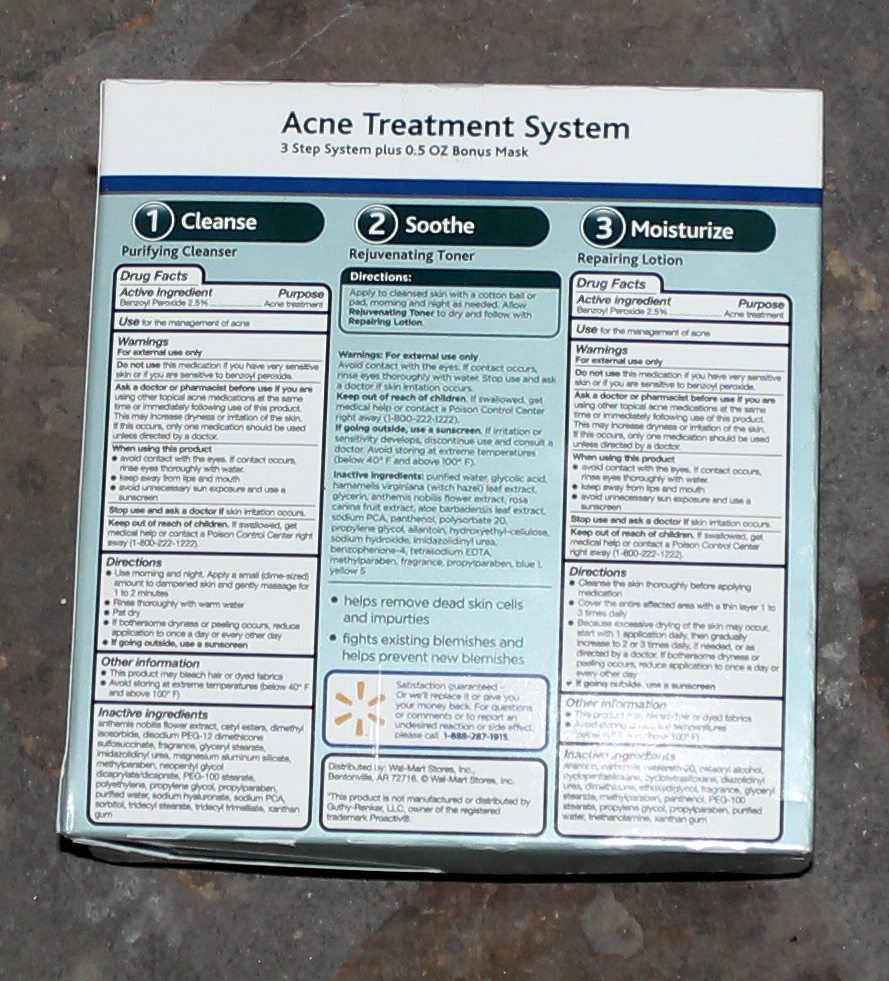
Many people experience horrible outbreaks. It is no fun having acne and very embarrassing. There are now various over-the-counter acne products that acne sufferers may take to control and to prevent it. The readers will know what to expect before trying a remedy and how to use through instructions. Just strictly never fail to follow the instructions.
Image
Zits and pimples can make even the most confident of individuals conscious about their looks. Despite this, teens and young adults with acne might not take medicines for the condition as instructed.
Less than 12 percent of young acne patients enrolled in Medicaid adhered to medication regimens to get rid of their pimples, a recently published study found.
Image
Combining topical medicines that reduce oil production with an antibiotic medicine might be a good choice for young acne patients given the costs and outcomes, according to the researchers.
Xi Tan, from the Department of Clinical, Social and Administrative Sciences at the University of Michigan, led a team of researchers investigating how often patients with acne adhered to their medicine. They also looked at the healthcare costs of acne medications and how those medications were used.
 Image
The study included more than 24,000 patients from January 2005 to December 2007. Almost 90 percent of the patients were under 18 years of age.
Image
Patients were listed in the Marketscan Medicaid Database, which tracks healthcare claims across the US. The researchers followed patients during the first three months after being prescribed an acne medicine.
Image
The researchers tracked the number of acne-related outpatient visits, acne medication adherence and total acne-related healthcare costs.
 Image
The researchers found that less than 12 percent of patients were adherent to acne medications on average.
 Image
Adherence rates were linked to a patient's age, gender, side illnesses, number of medicine refills and the number of medication classes used.

No Need To Stress Over Acne


We thought after high school or college life, acne will just fade away. Now that you are in twenties you still have acne—on your face, back, chest and other parts of your body--bothering since teenage years. Having acne can be beyond your thirties, fourties and even fifties. Don’t lose hope there are many acne treatments to cure and stop acne build-up. If you need help, you can do some research or ask a dermatologist for other options.

The most common causes of acne include the overproduction of oil, dead skin irritating hair follicles and accumulation of bacteria. The buildup of oil and dead skin within the hair follicles creates a perfect environment for bacteria to thrive.
Some myths about acne perpetuate, such as the notion that chocolate and greasy foods lead to acne. While it’s definitely better to not gorge on pepperoni pizza and Hershey bars, you can rest assured that indulging isn’t going to result in eruptions on your face the next day.
There is some scientific correlation between diet and acne. According to the Mayo Clinic, dairy products and carbohydrate-rich food can lead to the formation of acne.
Another myth in which many of us seek refuge is that acne is caused by stress. We cling to the hope that when life slows down and things are no longer hectic, our skin will calm down too. Unfortunately, that’s not entirely the case. Lisa Garner, a clinical professor of Dermatology at the University of Texas Southwestern Medical Center says that stress reduction won’t eliminate acne
According to a 2003 Stanford University study, college students had an increase in acne during exam periods because most acne is triggered by hormone production — in particular, androgens — which lead to the enlargement of sebaceous glands and cause increased oil production. While stress can cause fluctuations in hormone production, exacerbating acne by causing the binding of stress hormones to the stress receptors on sebum-producing cells, it’s not the actual cause of the acne.
Once acne begins to flourish, it’s tempting to scrub at it like there’s no tomorrow, but that’s not helping matters at all. In fact, scrubbing at acne can irritate it further. Instead, using tried and tested products, in addition to gently cleansing your face, can help keep acne at bay. Over-the-counter products such as benzoyl peroxide, salicylic acid and retinoids have been proven to help reduce the occurrence of acne. If over-the-counter products don’t cut it, a meeting with your dermatologist to discuss more stringent options, such as Accutane, may be in order.


Huwebes, Abril 25, 2013

Eight Surprising Causes for Breakouts


We are accustomed that causes of acne are hormonal, psychological and the like. I have stumbled upon this very helpful article which list-outs unexpected eight specific triggers for acne like toothpaste which causes red bumps around and below the mouth. Reminder, consult your dermatologist before you adopt some of the suggestions.

Acne has many triggers,” says Dr. Simon Ourian, Medical Director of Epione Beverly Hills, “and the article includes some of the usual suspects such as stress and birth control pills. But I wouldn’t recommend that my patients take ibuprofen to deal with stress or change their toothpaste because it supposedly causes small, red bumps around the mouth” 
Hair care products are also on the list as acne triggers because they can clog the skin’s pores leading to pimples. Salicylic acid pads to keep the area beneath the hairline clean and antibacterial shampoos are recommended as remedies.

Another cause of clogged pores is soap residue that may be the due to the hard water which doesn’t rinse as well as soft water. The article suggests installing a water softener as a low cost solution.
Perhaps the list’s most unusual entries are the whitening agents and fluoride found in most toothpaste. These ingredients may cause perioral dermatitis, small bumps that can occur around the mouth. The proposed solution, one not endorsed by Dr. Ourian, is switching to a fluoride-free, non-whitening toothpaste.

“I’m not going to try and dissuade patient from filtering their water or switching shampoos,” says Dr. Ourian, “some of the article’s other suggested remedies should be discussed with a physician prior to implementation.”

Miyerkules, Abril 24, 2013

New Study Could Ease Acne Burden in Our Community


Despite the widespread of acne treatments, there are still millions of acne sufferers in different countries. Why is that so? Maybe some of the cures are not that effective, the products are not suitable for a skin type or the users are not following the instruction. A study of University of South Australia could benefit them as it is investigating essential oils and aromatherapy to be effective means to treat acne. The said university is also examining the psychological impact and cost comparisons with the conventional treatments.
Image
“The majority of teenagers will experience the physical symptoms of acne at some point during adolescence. In Australia, more than 80% of all teenagers have acne,” Ms Agnew says.
Image
“Current acne treatments include over-the-counter remedies and prescribed topical and oral medication. As acne is a multi-factorial disease, a combination of treatments is often recommended. But these multiple drug regimens are complex, can have side-effects, and poor adherence to treatment is common.”
Image
While the physical symptoms of acne typically last ‘on and off’ for between two and five years, Ms Agnew says the psychological effects from the disease can continue well into adulthood. An important component of the study will be evaluating whether any observed reduction in physical presentation through treatment with essential oils leads to a better quality of life for sufferers.
Image
“Acne can have lasting psychosocial effects, which are not often addressed,” Ms Agnew says.
“These symptoms can include anxiety, depression, impairment of emotional functioning, and low self-esteem and body image issues.”
Image
The study will enlist aromatherapy clinicians to treat two groups with essential oils, supplied by Sydney Essential Oil Company. A third group will continue their regular treatment routine and receive the essential oils product at the end of the trial period.
Image
“This will be the first known randomised controlled trial to examine the effectiveness of aromatherapy as it is practiced by clinicians,” Ms Agnew says.
“Essential oils have the potential to act via dermal absorption and their therapeutic properties make them potentially effective in treating bacterial infection, inflammation, pain and nausea.
“In vitro studies have found essential oils to be effective against the bacteria involved in acne Propionibacterium acnes - but there is a lack of clinical evidence to support the claims that essential oils will help reduce physical symptoms of acne, which is why this study is so important.
Image
“We will also be evaluating the cost-effectiveness of aromatherapy, as there is currently a lack of literature to see if there are any benefits in this area.”